
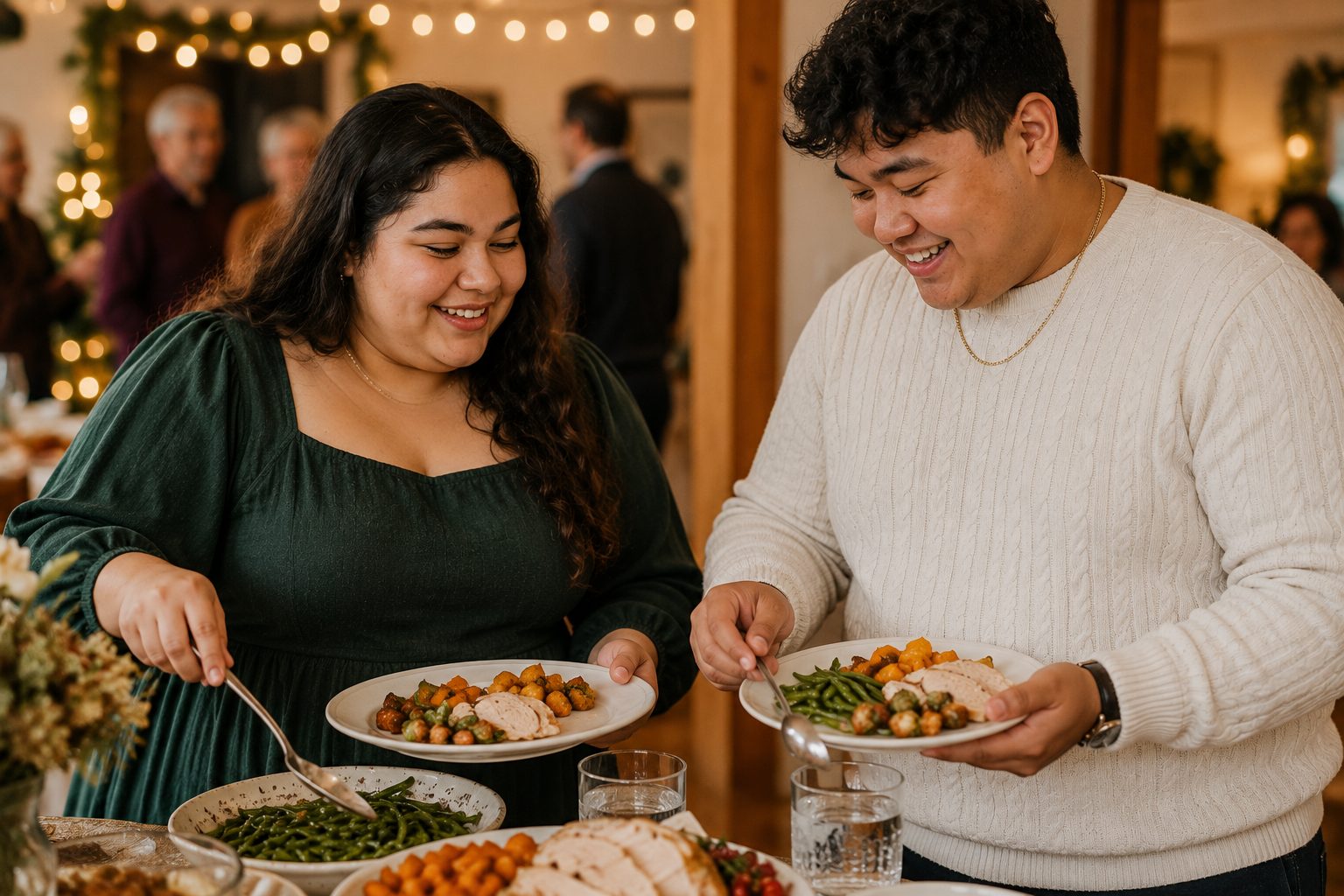
The holidays are basically a month of food, with family dinners, dessert tables, and party after party. If you’re on a GLP-1, that can feel like a lot to figure out. Here’s the thing: you don’t have to sit the season out, and you don’t have to white-knuckle it either. With a few simple moves you can enjoy the food, be part of everything, and keep your treatment on track. This one’s written for you, not your parents.
Why the holidays hit different on a GLP-1
Your medication works partly by slowing how fast your stomach empties and by turning down your appetite, so you feel full sooner and stay full longer. At a season built around huge meals, that shows up in two ways: a big, greasy, or super-sugary plate can feel uncomfortable, and the usual “go back for thirds” move just might not happen. That’s not you failing at the holidays. That’s the medication doing exactly what it’s supposed to do. Expect it, and it’s a lot less annoying.
Lead with protein
The single most useful habit is the same one that helps year-round: build your plate around protein first. When your appetite is smaller, whatever you do eat counts for more, so start with turkey, chicken, fish, eggs, beans, or dairy, because that’s what protects your muscle and gives you steady energy while your weight changes. Add vegetables and fruit, and let the heavy sides and desserts be the smaller corner of the plate instead of the whole thing. (If you want the deeper version, we wrote a whole post on eating well on a GLP-1.)
Go easy on the richest foods
Because your digestion is slower, the very greasy, fried, or heavily sugary foods, basically the holiday all-stars, are the ones most likely to leave you queasy or uncomfortably stuffed. You don’t have to skip your favorites. Just take a smaller portion and eat it slowly; that usually sits way better than a giant plate you finish fast. If one food messes with you every time, make a mental note and bring it up at your next visit.
Slow down and let your fullness catch up
Your “I’m full” signal takes a while to show up, even more so on a GLP-1. So eat slowly, put your fork down between bites, and check in with yourself partway through. Start with a smaller serving, since you can always grab more if you’re honestly still hungry. That way you’re going off how you actually feel, not the speed of the table around you.
Don’t skip meals to “save room”
It’s tempting to skip breakfast and lunch so you can go big at dinner. On a GLP-1, that usually backfires. Showing up starving, on an empty stomach, can make nausea worse and tank your energy. Eating steady, protein-forward meals and snacks earlier in the day actually makes the big meal feel better, not worse.
Drink water (and know this about alcohol)
When your appetite is low it’s easy to forget to drink, and being a little dehydrated can feel a lot like being tired or getting a headache. Keeping water with you through the day is an easy win. And if you’re of legal drinking age: alcohol can hit harder on a smaller stomach and lighter food intake, and it’s basically calories with no nutrition, so go slow and keep water next to it.
Keep the routine that’s working
Travel, late nights, and a packed calendar can throw your whole rhythm off. Try to keep the things that support your treatment steady: take your medication on schedule the way your physician told you to, protect your sleep, and keep some movement in your week. A walk after dinner totally counts. It doesn’t have to be perfect. Staying consistent matters way more than going hard.
It’s your plate
Here’s something to hold onto: you don’t owe anyone an explanation for what’s on your plate. If a relative has opinions about how much or how little you’re eating, you’re allowed to let that roll off. The holidays are about the people, not a performance around food. Enjoy the meal, enjoy your people, and let the rest go.
Use your dietitian, that’s what they’re there for
If you’re in our program, this is exactly the kind of thing your registered dietitian can help you plan. Every WellTeenMD program includes five one-on-one dietitian visits, and a session before or during the season can turn all of this into a real plan built around the foods you actually like and the meals your family actually makes. And if new side effects or questions come up, your physicians are here. This is ongoing care, not a one-and-done prescription.
The bottom line
Being on a GLP-1 doesn’t mean skipping the holidays. It just means going through them a little more on purpose: protein first, easy on the richest stuff, slow and steady pacing, don’t skip meals, and keep your routine where you can. Do that, and you can be all the way in the season and still stay on track, no guilt required.